
Expanding the "We" in Times Like These
Over the holidays—during what we now know was the calm before the storm—I watched a series called The Playbook: A Coach’s Rules for Life.
One of the coaches featured was Doc Rivers, reflecting on the 2008 Boston Celtics championship. A team that hadn’t won in 22 years. A team stacked with talent that didn’t become a team until they embraced one idea:
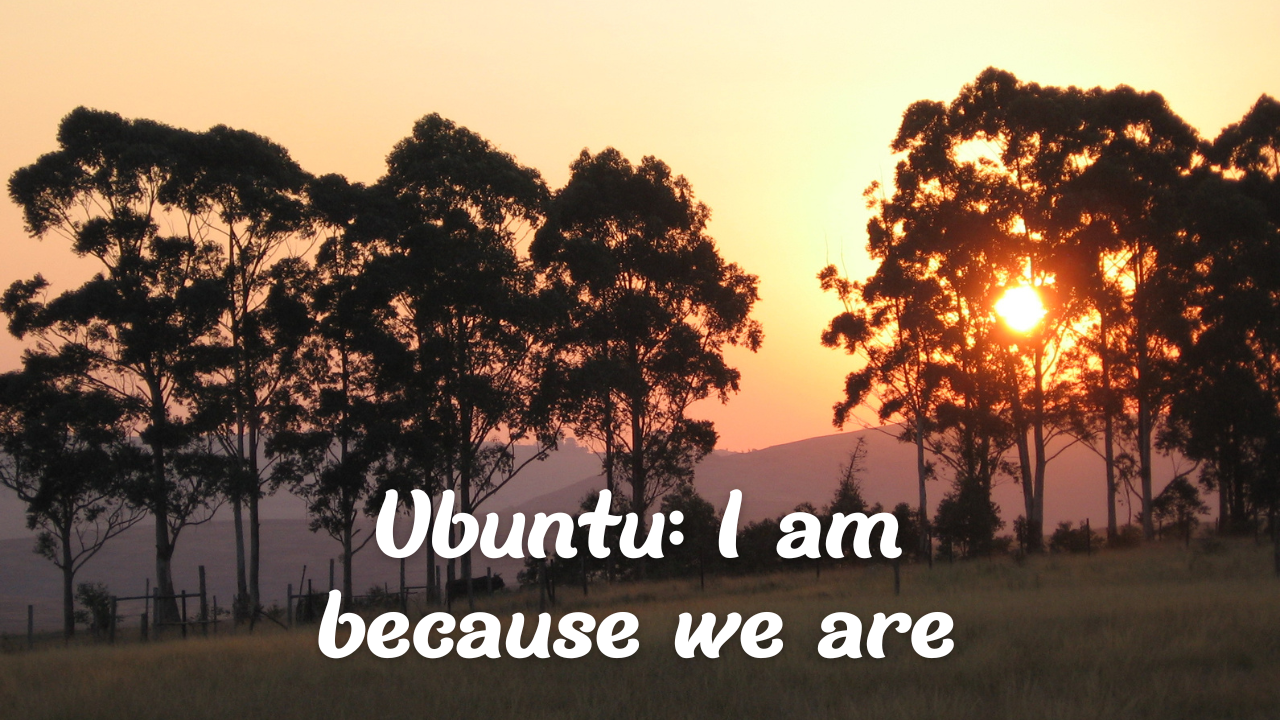
Ubuntu.
A Zulu and Xhosa word often translated as I am because we are. More fully, Ubuntu reflects a belief in shared humanity, compassion, and deep interconnectedness. That who we become is shaped by how we treat one another. That restoration—not domination—is how we move forward.
Desmond Tutu famously used Ubuntu during South Africa’s Truth and Reconciliation process. Not to erase harm. Not to avoid accountability. But to bring people back to one another so something new could be built.
That word hit me hard—because 2008 was also the year I was in South Africa.
I was there working in a rural village with a group of women business owners. This was during the rise of microlending, when access to capital was being positioned as the solution. Each woman had once run a thriving business: baking, sewing, masonry, farming. Then things went sideways.
Economic conditions changed. Transportation was unreliable. Expansion beyond the village was nearly impossible. And well-meaning white people donated industrial ovens that required installation and consistent electricity—neither of which the village had.
The ovens sat unused.
The businesses eroded.
And what had once been peaceful coexistence turned into fighting and competition.
Too many seamstresses.
Not enough bakers or brick makers.
And growing resentment.
Still, the women wanted to come together. They could see that what was happening wasn’t working. During a two-day workshop, tensions rose. People fought for their position and progress didn’t seem possible until one woman, well respected in the village, was encouraged to speak.
Even through an interpreter, we could feel the shift. She talked about Ubuntu. And from that moment on, the work changed. The women began helping one another decide which businesses each would focus on—and how they would support one another so everyone could earn a living.
It wasn’t perfect.
It wasn’t a solution.
But it was a beginning.
It was the first time I heard the word Ubuntu. I felt like I experienced, it, too. Kind of like what I’m seeing and feeling in the Twin Cities right now.
Maybe it’s top of mind because of Doc Rivers, or it’s the memory of the women in Malungeni who chose unity over individual survival. I’d like to think it’s because I’m seeing Ubuntu in action right now.
Women business owners organizing to support the hospitality industry.
Leaders contributing to journalism and protecting the First Amendment.
Neighbors delivering food.
Donations being coordinated and distributed by people who have been here all along—just turning the volume way up.
No single hero.
No one leader with all the answers.
Just collective leadership. Quiet. Powerful.
A shift from what I prefer to what’s needed now.
For me, Ubuntu is asking us to see ourselves in our neighbors.
It’s asking leaders to lean into the we—and expand it.
To cast a larger net:
Whole companies.
Whole school systems.
Whole neighborhoods.
Whole communities.
Whole cities.
Whole states.
A whole country.
Ubuntu isn’t soft.
It’s not passive.
And it’s not about losing yourself for the group.
It’s about recognizing that none of us win alone.
I am because we are.
Take a moment to reflect: where are you seeing Ubuntu in action right now?

Click the button below if you would like a chance to be featured on the Champions of RISK Podcast.

Recent Posts
